Shoulder Arthroscopy
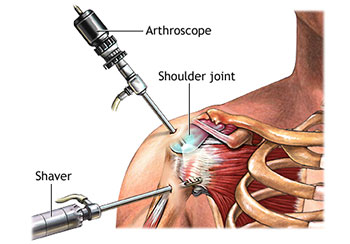
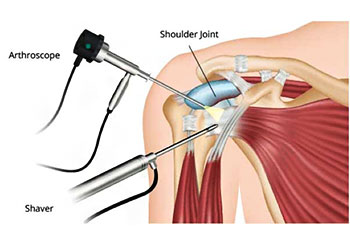
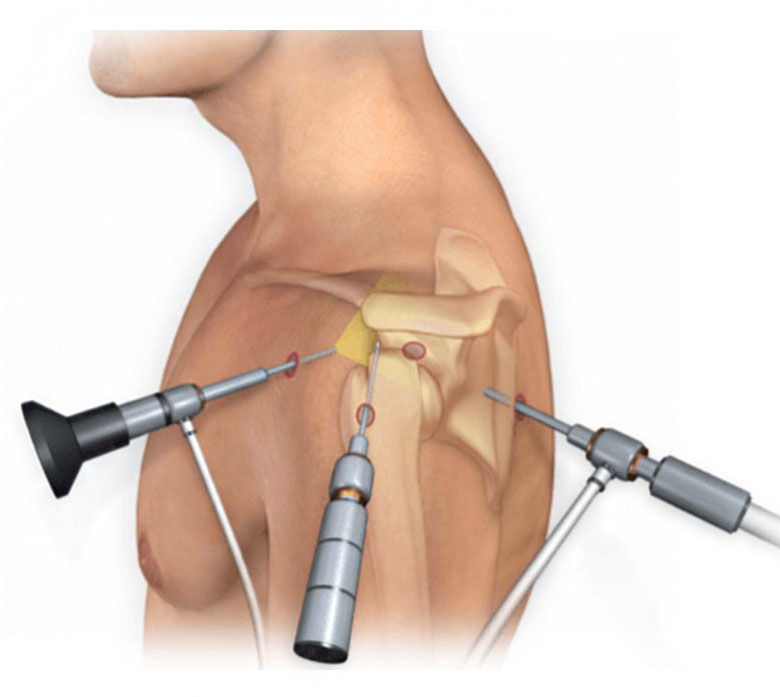
Shoulder arthroscopy is a minimally invasive surgery used to diagnose and treat shoulder problems. You might have arthroscopy for rotator cuff tears or shoulder impingement. Minimally invasive procedures require smaller incisions than traditional surgery. Each incision is about the size of a keyhole.
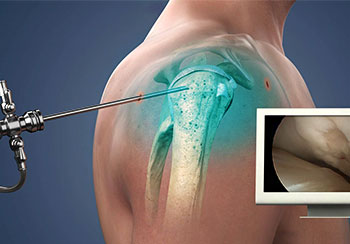
A small camera called an arthroscope is inserted through a tiny incision in your skin. This camera projects pictures of your shoulder joint to a video screen. Miniature surgical instruments are used to restore your shoulder’s mobility.
Why is shoulder arthroscopy done?
Shoulder arthroscopy helps find and treat shoulder pain that has not responded to nonsurgical treatments. Nonsurgical treatments for shoulder pain include physical therapy, medication, injections and rest.
What happens after shoulder Arthroscopy?
Shoulder Arthroscopy is usually an outpatient procedure. That means you can go home the same day or the next day. Your surgery team will monitor you in a recovery room while the anesthesia wears off.
What shoulder injuries does arthroscopic shoulder surgery treat?
Shoulder arthroscopy can remove inflamed tissue. It can also treat injuries such as:
- Biceps tendon injuries
- Bone spurs
- Frozen shoulder
- Labrum tears, injuries to the tissue around your shoulder socket.
- Osteoarthritis
- Rotator cuff tears
- Rotator cuff tendinitis
- Shoulder impingement syndrome
- Shoulder instability, when your shoulder joint becomes loose or dislocated
How common is shoulder arthroscopy?
Shoulder arthroscopy is the second most common orthopedic surgery after knee arthroscopy. Orthopedic surgery treats joints, bones, muscles, ligaments and tendons. Rotator cuff surgery is one of the most common types of shoulder arthroscopy.